
System Planning and Definition
Water Bottling System Interface Risk Assessment
Assess each interface from the same five questions: what crosses the boundary, what failure can follow, when the exposure becomes real, how the condition is detected, and which approved evidence permits the next decision.
Decision focus
What must cross this boundary, under which condition, who owns the response, and what evidence closes the interface?
01
Direct Answer
Assess each interface from the same five questions: what crosses the boundary, what failure can follow, when the exposure becomes real, how the condition is detected, and which approved evidence permits the next decision.
Search intent answer
How Should a Buyer Prioritize Water Bottling System Interface Risks?
A practical answer for buyers comparing equipment, scope and connected-system requirements.
Start with the decision gate, not an arbitrary score. A missing bottle drawing before change-part release, an unverified utility condition before installation and an undefined restart state before connected testing create different exposures even when all three are marked open.
For each boundary, record the credible consequence, the first point at which the project becomes exposed, the available detection method and the evidence needed for release. Escalate items that can affect product, equipment, schedule or controlled recovery and cannot be detected before the consequence occurs.
Consequence
Describe what can happen to product, equipment, control, acceptance or restart if the handoff is wrong.
Exposure gate
Name the last practical point to close the item: proposal, design release, order, installation, dry test, wet run or restart.
Detectability
State whether the mismatch is visible in documents, measurable at the terminal or observable only in a connected scenario.
Release evidence
Identify the drawing, measurement, approved sample, logic review or witnessed result that changes the status from open to released.
System scope
Interface Risk Triage by Decision Gate
Use consequence and evidence quality to choose the next action; do not convert unknowns into false precision.
| Boundary question | Exposure to control | Useful evidence | Release decision |
|---|---|---|---|
| Reference format | Wrong bottle, closure, label or pack basis reaches design release | Approved drawing, controlled sample and revision record | Release format-dependent design only against the same approved reference |
| Physical transfer | Geometry, orientation or accumulation mismatch reaches fabrication or installation | Dimensioned interface drawing, site measurement and transfer review | Release the tie-in when both sides accept the same terminal geometry |
| Utility terminal | A nominal supply is assumed adequate before connected operation | Machine requirement sheet and measured available condition on the same basis | Release operation only when the terminal condition and loss response are confirmed |
| Controls handshake | Names match but state meanings or fail behavior remain different | State matrix, I/O or data map and abnormal-scenario record | Release connected testing after both owners approve meanings and responses |
| Restart and acceptance | Local resets are treated as system readiness | Path-clearance checks, restart prerequisites and witnessed result | Release production return only against the agreed connected-system evidence |
Buyer terminology
Issue, Assumption, Deviation and Risk Are Not the Same
Consistent labels make reviews and retrieval less ambiguous.
| Record type | Meaning | Required disposition |
|---|---|---|
| Open input | Required project information has not been supplied or verified | Name the source, owner and due gate |
| Assumption | A temporary basis is used so work can continue | State the impact and the decision that must confirm or replace it |
| Interface issue | The two sides are incomplete, inconsistent or not jointly agreed | Assign action, evidence and closure status |
| Deviation | The proposed or observed condition differs from an approved requirement | Record approval authority and accepted disposition |
| Risk | The unresolved condition can create a defined consequence at a future gate | Prioritize the owner action before exposure becomes irreversible |
02
Position in the System
This guide turns identified interface gaps into a prioritized, owner-based release record. It does not estimate failure probability from unsupported data or replace a project hazard, safety or regulatory assessment. It controls the boundary between The current design basis, supplier proposal, installed condition and open interface list and The next procurement, design, installation, test or restart decision gate. It does not assign invented numeric probabilities, safety integrity levels, compliance decisions or commercial liability.
03
Buyer Inputs
- The buyer decision to close: Which open machine-to-machine interface risks must be closed before scope release, order, installation or connected testing?
- Current drawings, data and operating records from The current design basis, supplier proposal, installed condition and open interface list.
- Approved terminal requirements and failure behavior from The next procurement, design, installation, test or restart decision gate.
- Project evidence for closure: current drawings, supplier terminal data, approved samples, site measurements, state definitions and witnessed scenario results applicable to the boundary.
- Named buyer, supplier and local owners for assumptions, actions, review and final approval.
04
Interface Map
One controlled record for the physical, process, utility, control and evidence boundary.
SystemInterfaceCard
Water Bottling System Interface Risk Assessment
- Upstream system
- The current design basis, supplier proposal, installed condition and open interface list
- Downstream system
- The next procurement, design, installation, test or restart decision gate
- Transferred material
- A controlled risk record containing boundary, failure consequence, exposure point, detection method, owner, action, evidence and release status
- Physical connection
- The documented physical, process, utility, signal or evidence boundary covered by this topic.
- Required condition
- Every material risk has a named owner, a due decision gate and evidence that is proportionate to the consequence of getting the boundary wrong
- Utility requirement
- Only equipment terminal conditions are recorded here; plant distribution and local code design remain with the responsible local parties.
- Control signal
- Availability, ready, hold, stop, fault, reset and restart information as applicable to the boundary
- Failure response
- A high-consequence interface remains hidden inside a general assumption or is allowed to pass its last practical closure gate. Hold the affected decision or operation until the named owner confirms the recovery basis.
- Evidence required
- Interface risk and release register, supported by current drawings, supplier terminal data, approved samples, site measurements, state definitions and witnessed scenario results applicable to the boundary.
Equipment Context at This Boundary

Equipment Used Across This System Scope
These images identify equipment categories and connection points. Final model and configuration selection remains project-specific.
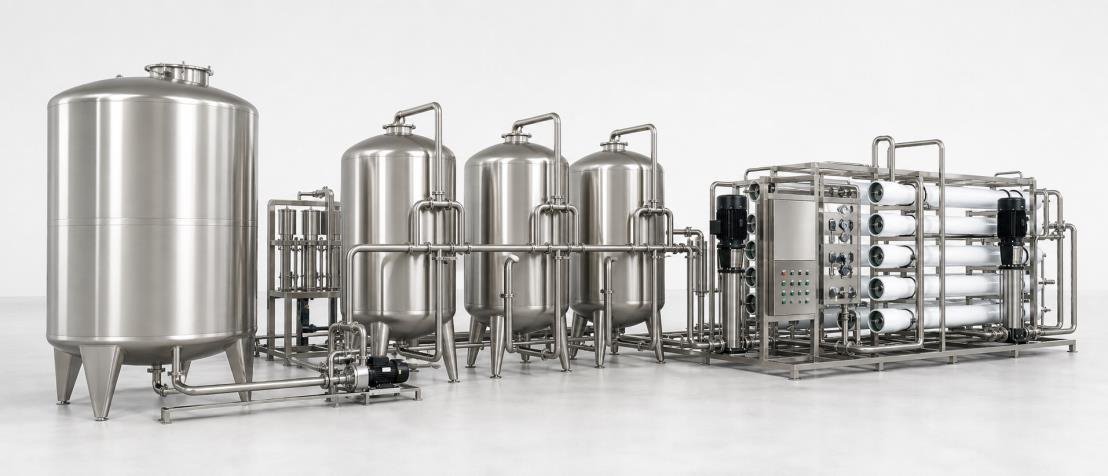
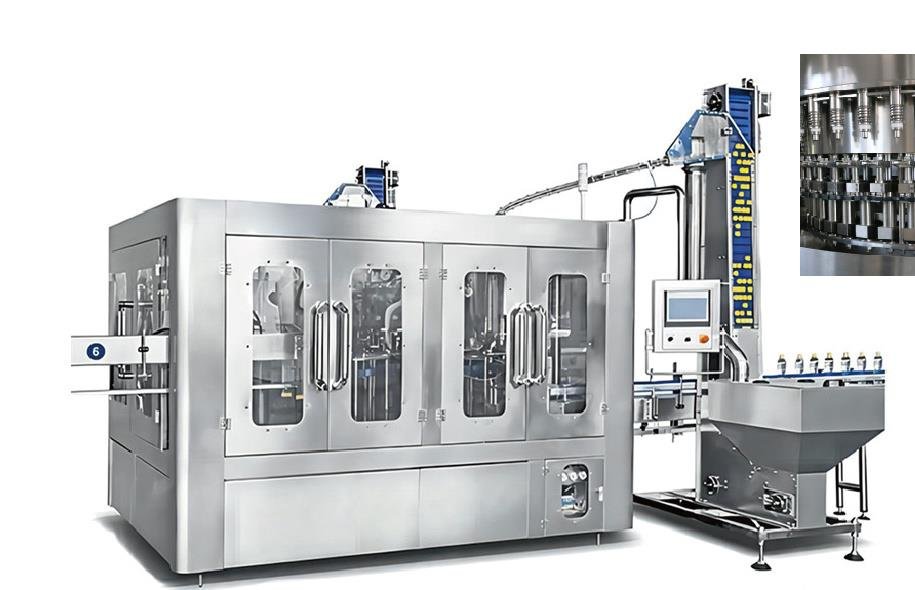
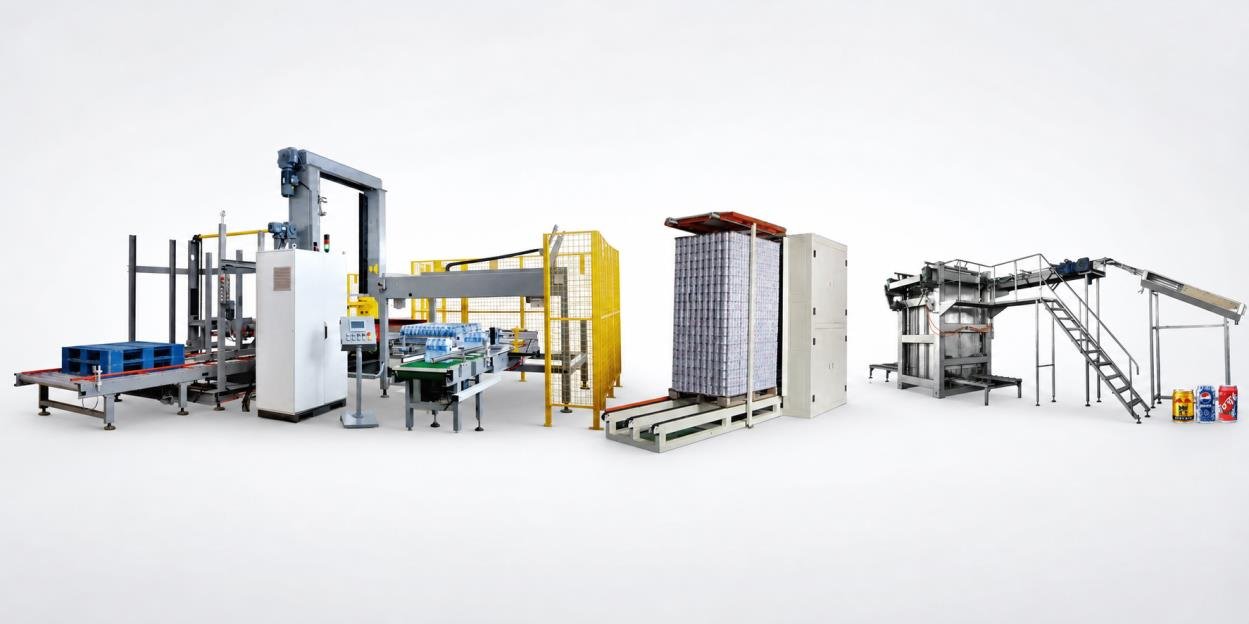
Catalog reference images: equipment context only. Final models, configuration, interfaces and performance require project-specific written confirmation.
05
Main Design Decisions
Decision basis
Assess each interface from the same five questions: what crosses the boundary, what failure can follow, when the exposure becomes real, how the condition is detected, and which approved evidence permits the next decision.
Boundary and handoff
Record A controlled risk record containing boundary, failure consequence, exposure point, detection method, owner, action, evidence and release status between The current design basis, supplier proposal, installed condition and open interface list and The next procurement, design, installation, test or restart decision gate.
Required condition and ownership
Every material risk has a named owner, a due decision gate and evidence that is proportionate to the consequence of getting the boundary wrong. The buyer owns the operating requirement; each supplier owns its machine data; the system coordinator maintains the shared interface record.
Closure artifact
Maintain the interface risk and release register against current drawings, supplier terminal data, approved samples, site measurements, state definitions and witnessed scenario results applicable to the boundary and preserve the approved revision.
06
Trade-offs to Resolve
Define now vs. carry an assumption
Closing this decision early can narrow supplier interpretation. Leaving it open may preserve options, but the assumption and later decision gate must be visible.
Local machine simplicity vs. system coordination
A broader early definition can expose more gaps, while a narrower definition can move decisions faster. The chosen boundary must remain explicit.
Broader scope vs. controlled boundary
It does not assign invented numeric probabilities, safety integrity levels, compliance decisions or commercial liability. Keep the page focused on the evidence needed for this one system decision.
07
Common Failure Modes
These are realistic review scenarios, not claims about a completed project.
- A high-consequence interface remains hidden inside a general assumption or is allowed to pass its last practical closure gate.
- The upstream and downstream parties use different product, format, operating or revision assumptions.
- The required condition is described but no party owns detection, response, reset or approval.
- The interface is accepted from a catalog or nominal value without current project evidence.
- A drawing or successful local machine test is treated as proof of the complete connected behavior.
08
Required Documents
- Interface risk and release register with owner, revision and status
- Approved design-basis register
- Current equipment and interface list
- Open-input and decision log
- Revision-controlled supplier data
09
Questions to Ask Before Quotation
- Which open machine-to-machine interface risks must be closed before scope release, order, installation or connected testing?
- What exact material, condition, signal, document or decision crosses this boundary?
- Which party detects a missing condition, owns the response and authorizes recovery?
- Which current document, sample, measurement or witnessed result will close the interface risk and release register?
- Which unknown remains open, who must confirm it and before which project decision?
Project-Specific Confirmation
This guide is an engineering interpretation for early coordination. The final interface risk and release register, equipment arrangement, terminal conditions, responsibilities and acceptance criteria require current project data and written approval by the applicable buyer, suppliers and local responsible parties.
11
Related System Pages
Questions
Questions About This Interface Decision
What decision does this Water Bottling System Interface Risk Assessment guide help close?
Assess each interface from the same five questions: what crosses the boundary, what failure can follow, when the exposure becomes real, how the condition is detected, and which approved evidence permits the next decision.
What should a buyer prepare for this review?
Prepare current project drawings, supplier records, reference samples or measurements relevant to the boundary, plus the owner and revision of each item.
Does this page approve a final design or supplier claim?
No. It organizes the decision and required evidence. Final engineering, equipment, performance and acceptance depend on the actual project and written confirmation.
Turn the unknowns into a reviewable interface
Review This System Decision
Share the available bottle, output, site, utility and supplier evidence. Open items can remain explicitly marked for confirmation.