
Bottle, Closure and Filling Interfaces
Filler Blocked Downstream: Coordinate Stop and Restart
A filler can be ready to run yet unable to discharge bottles. Separate a physically occupied path, a missing downstream permission and a machine fault before comparing conveyor or packing upgrades.
Decision focus
Which downstream condition first removes discharge availability, and who authorizes recovery?
01
Direct Answer
Map the filler exit, intervening conveyor zones and the receiving machine with a common bottle format and event interval. Define how a blocked state is detected, communicated and resolved, including upstream propagation and bottle disposition. A clear-looking conveyor or a downstream reset is not by itself permission to restart the connected system.
Identify the first lost discharge condition
Request a blocked-transition map rather than treating every upstream stop as a separate failure. It should show the initiating downstream event, propagated responses, physical bottle positions and the evidence for a controlled return to service. Allot Tech can coordinate supplier interfaces; the approved design, safe-work method and product release remain project decisions.
Locate the boundary that cannot receive bottles
Follow the discharge route by named zone to the next receiving machine. Record what available means at each boundary: actual usable space, receiving-machine condition and agreed permission may be separate. A blocked message is a clue, not proof that the filler or the last conveyor is defective. Include format changes, material replenishment and an unavailable reject path if relevant to the actual design. Use existing event records and qualified safe observation; this guide does not instruct an operator to remove bottles or adjust guides while machinery moves.
Distinguish temporary accumulation from a sustained deficit
Record usable free positions and the accepted inflow/outflow basis for the observed format, not merely table area or an equipment's maximum rating. Accumulation may cover a temporary interruption but cannot establish that a persistent receiving-rate deficit has disappeared. Compare event frequency, occupied stock and how the buffer returns to its normal condition. Do not assume a universal number of buffer minutes or a default efficiency factor. A quotation should state the boundary, exclusions and evidence supporting its proposed accumulation scope, with final capacity confirmed for the project.
Assign propagation, clearance and restart separately
A downstream event can create several upstream waiting states. Use synchronized timestamps to identify the initiating loss and propagated responses without adding overlapping state durations as separate line downtime. Name the owner of blocked detection, filler response, upstream request, clearance evidence and restart permission. Normal blocked/starved coordination is not a substitute for safety functions. Acknowledging an alarm, seeing empty space and receiving a run permission are different conditions; the approved supplier design must define their relationship and how contradictory or lost signals are handled.
Verify recovery and affected bottles on one record
Hypothetical review: packing resumes after a stop, but an intermediate zone still lacks its receiving permission. A downstream run status does not prove every handoff is ready. Ask the suppliers to verify the agreed state sequence, path-clear evidence and recovery record under an approved safe acceptance plan. Identify held or uncertain bottles by location, count basis and lot/interval; a controller reset does not release them. Compare accepted output and repeat events on the same basis before and after any change. This scenario is not an installed customer case, a universal sequence or permission for live fault injection.
Evidence for a blocked-transition review
- Named filler-exit and receiving boundaries, approved bottle format and the exact available/blocked definitions.
- Time-aligned downstream event, conveyor-zone conditions and filler/upstream responses with signal owners.
- Usable accumulation basis, occupied/free stock and comparable accepted rates; list assumptions and exclusions.
- Separate clearance, acknowledgement and restart permissions, including who resolves missing or conflicting evidence.
- Affected-bottle location and quality authority, counter resets and an approved recovery/acceptance record.
Project engineering, safety and quality review is required. No universal buffer time, stop delay or restart sequence is specified. Never bypass interlocks, force a blockage on a running line or reintroduce held bottles without approved procedures.
Review adjacent discharge interfaces
- Filler discharge handoff — Confirm the physical bottle and ownership boundary.
- Conveyor and accumulation coordination — Review usable space and the receiving-rate basis.
- Filler bottle-starvation response — Keep upstream shortage distinct from downstream unavailability.
02
Position in the System
This guide isolates the named machine-to-machine decision and the project evidence needed to close it. It controls the boundary between Approved empty-container or closure supply and The connected handling, rinsing, filling or capping function. It does not select equipment models, publish unsupported performance values or replace project-specific engineering.
03
Buyer Inputs
- The buyer decision to close: How should filling respond when its discharge path is blocked?
- Current drawings, data and operating records from Approved empty-container or closure supply.
- Approved terminal requirements and failure behavior from The connected handling, rinsing, filling or capping function.
- Project evidence for closure: the filler-blocked transition map, current drawings, approved supplier data and the agreed witnessed result.
- Named buyer, supplier and local owners for assumptions, actions, review and final approval.
04
Interface Map
One controlled record for the physical, process, utility, control and evidence boundary.
SystemInterfaceCard
Filler Blocked-State Coordination
- Upstream system
- Approved empty-container or closure supply
- Downstream system
- The connected handling, rinsing, filling or capping function
- Transferred material
- The project-specific material, state, terminal condition and evidence described by Filler Blocked-State Coordination
- Physical connection
- The documented physical, process, utility, signal or evidence boundary covered by this topic.
- Required condition
- The buyer and connected parties approve one current basis for this decision: How should filling respond when its discharge path is blocked?
- Utility requirement
- Machine and transfer terminal conditions must be taken from the approved bottle, closure and supplier basis for the actual project.
- Control signal
- Availability, ready, hold, stop, fault, reset and restart information as applicable to the boundary
- Failure response
- Filler Blocked-State Coordination is treated as agreed even though its condition, owner, revision or evidence remains open. Hold the affected decision or operation until the named owner confirms the recovery basis.
- Evidence required
- Filler-blocked transition map, supported by the filler-blocked transition map, current drawings, approved supplier data and the agreed witnessed result.
Equipment Context at This Boundary
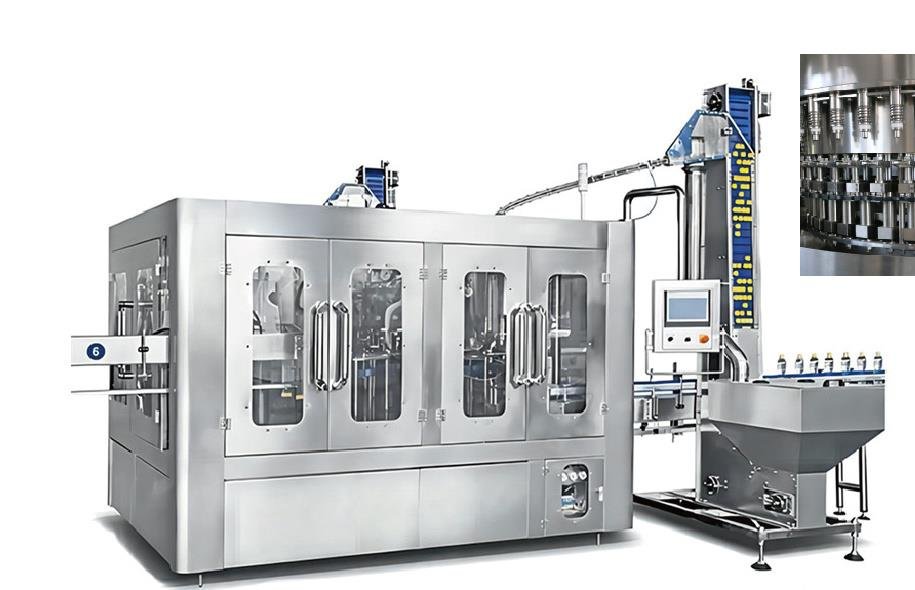
Equipment Used Across This System Scope
These images identify equipment categories and connection points. Final model and configuration selection remains project-specific.
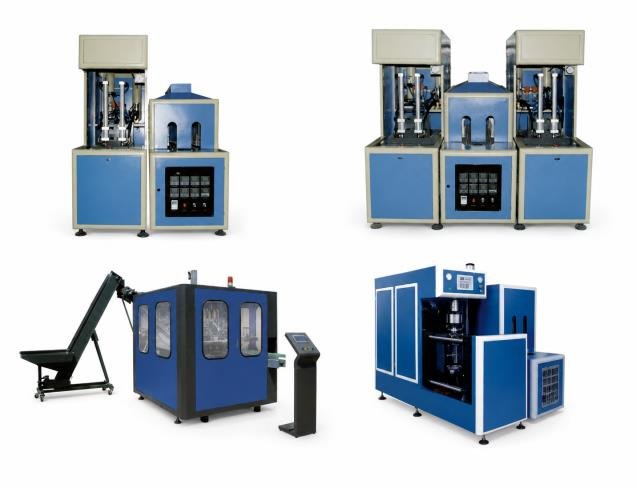
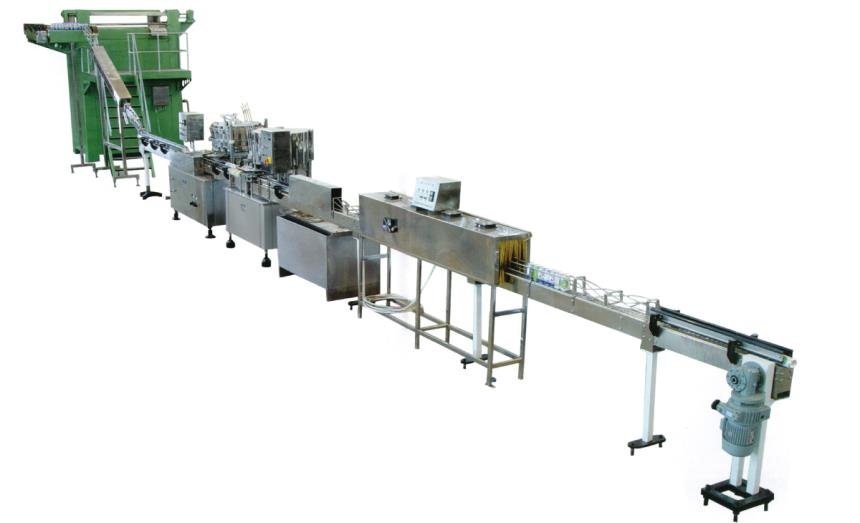
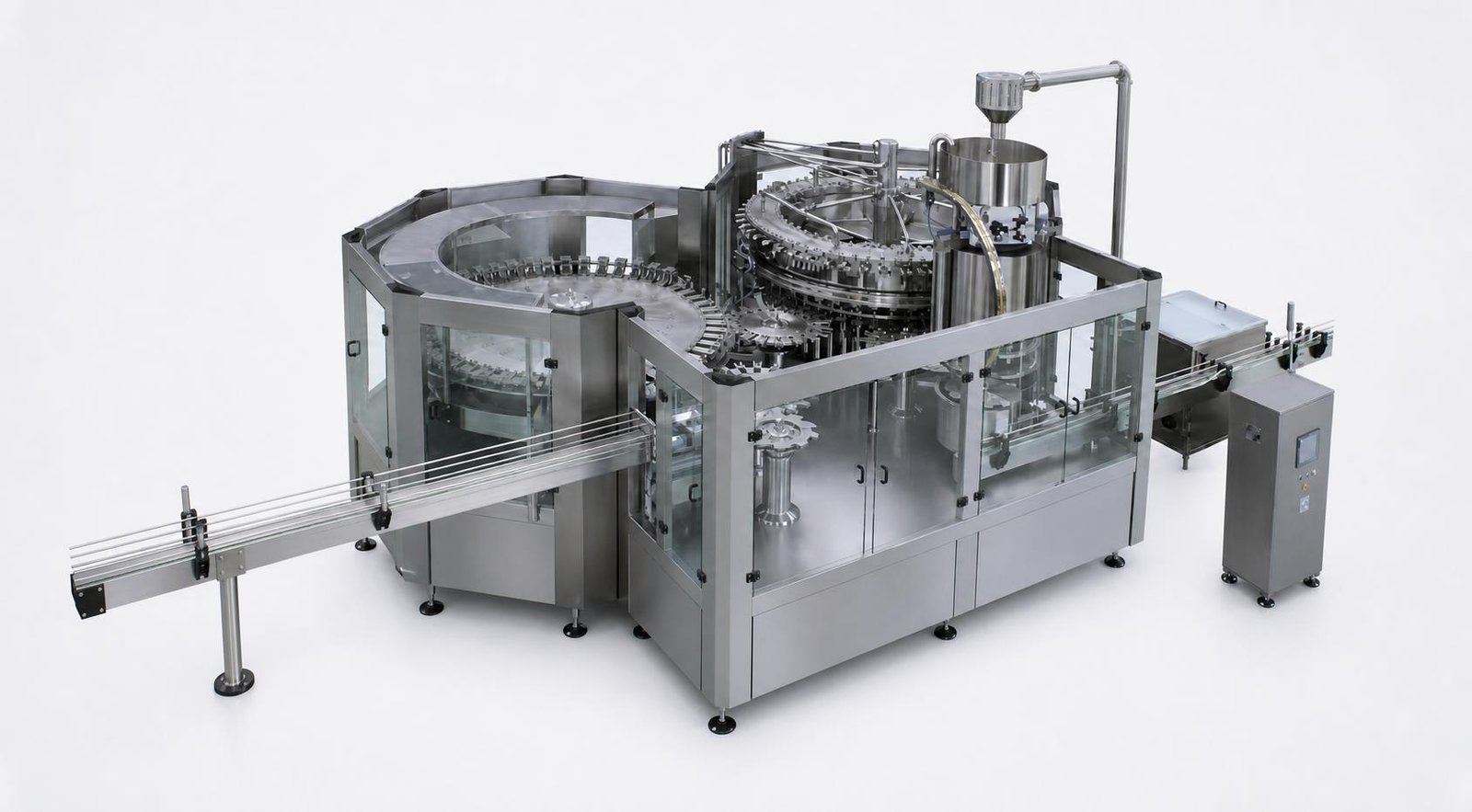
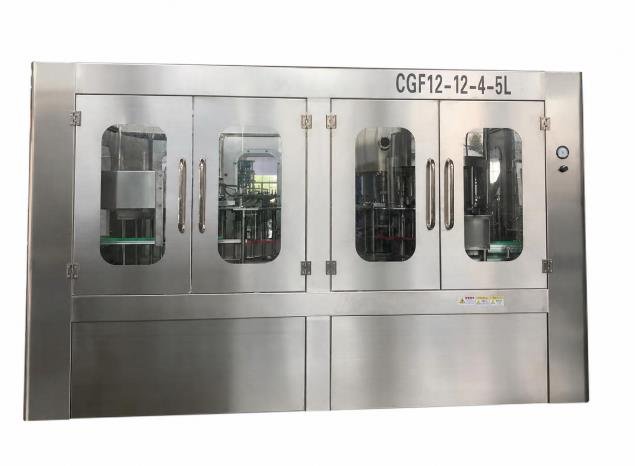
Catalog reference image used to explain equipment and system interfaces. It is not a fixed package or a completed customer project.
05
Main Design Decisions
Decision basis
Define blockage detection, downstream state, filler hold or controlled stop, upstream propagation, bottle disposition, path-clear check and restart permission.
Boundary and handoff
Record The project-specific material, state, terminal condition and evidence described by Filler Blocked-State Coordination between Approved empty-container or closure supply and The connected handling, rinsing, filling or capping function.
Required condition and ownership
The buyer and connected parties approve one current basis for this decision: How should filling respond when its discharge path is blocked?. The buyer approves the reference container and closure; the connected suppliers confirm handling limits, states, change parts and test evidence.
Closure artifact
Maintain the filler-blocked transition map against the filler-blocked transition map, current drawings, approved supplier data and the agreed witnessed result and preserve the approved revision.
06
Trade-offs to Resolve
Define now vs. carry an assumption
Closing this decision early can narrow supplier interpretation. Leaving it open may preserve options, but the assumption and later decision gate must be visible.
Local machine simplicity vs. system coordination
A wider format envelope can preserve future options, while increasing handling, change-part and verification scope for the current installation.
Broader scope vs. controlled boundary
It does not select equipment models, publish unsupported performance values or replace project-specific engineering. Keep the page focused on the evidence needed for this one system decision.
07
Common Failure Modes
These are realistic review scenarios, not claims about a completed project.
- Filler Blocked-State Coordination is treated as agreed even though its condition, owner, revision or evidence remains open.
- The upstream and downstream parties use different product, format, operating or revision assumptions.
- The required condition is described but no party owns detection, response, reset or approval.
- The interface is accepted from a catalog or nominal value without current project evidence.
- A drawing or successful local machine test is treated as proof of the complete connected behavior.
08
Required Documents
- Filler-blocked transition map with owner, revision and status
- Approved bottle, neck and closure drawings
- Signed reference samples or sample-control record
- Dimensioned transfer and change-part information
- Connected operating-state and test record
09
Questions to Ask Before Quotation
- How should filling respond when its discharge path is blocked?
- What exact material, condition, signal, document or decision crosses this boundary?
- Which party detects a missing condition, owns the response and authorizes recovery?
- Which current document, sample, measurement or witnessed result will close the filler-blocked transition map?
- Which unknown remains open, who must confirm it and before which project decision?
Project-Specific Confirmation
This guide is an engineering interpretation for early coordination. The final filler-blocked transition map, equipment arrangement, terminal conditions, responsibilities and acceptance criteria require current project data and written approval by the applicable buyer, suppliers and local responsible parties.
11
Related System Pages
Questions
Questions About This Interface Decision
Does a blocked filler mean the filler needs more speed?
No. First locate the downstream condition that cannot accept bottles. Faster filling cannot prove that a receiving constraint, replenishment problem or recovery-permission issue has been resolved.
Will a larger accumulation table eliminate the stoppage?
Not necessarily. Usable space can absorb temporary mismatch, but a continuing inflow/outflow deficit will still consume it. The supplier must confirm format handling, free capacity, control response and recovery evidence for the project.
Is an empty conveyor sufficient to restart?
No. Physical clearance, equipment readiness, agreed receiving permission and authorized recovery must be checked under the approved design. Do not infer a safe sequence from the appearance of the path.
How should several machines' blocked times be counted?
Preserve per-machine state histories but reconcile them to a shared line interval. Overlapping propagated waits must not automatically be added as independent line losses. Retain the initiating event and any uncertainty in its cause.
What should I include in a review request?
Layout and format revisions, state definitions, time-aligned events, accumulation/count records and unresolved supplier responsibility. Allot Tech can coordinate scope clarification; this is not remote safety approval, product release or a guaranteed improvement.
Turn the unknowns into a reviewable interface
Review This System Decision
Share the available bottle, output, site, utility and supplier evidence. Open items can remain explicitly marked for confirmation.